First Prize for Our Low-Cost GNSS-IR Tide Gauge 低成本 GNSS-IR 水位计项目荣获创新场景挑战赛未来信息赛道一等奖
I recently participated in the Second Beijing University Science Association Alliance Innovation Scenario Challenge (2025) in the Future Information Track. My independently developed low-cost GNSS-IR tide-gauge project received First Prize and ranked first in the track. This achievement represents an important milestone in transforming several years of academic research into an innovation-oriented engineering project.
From scientific research to an operational monitoring system
My recent research has focused on low-cost GNSS-IR sea-level and water-level monitoring. By integrating affordable GNSS hardware, edge-computing platforms, wireless communication, and real-time processing algorithms, I aim to build an intelligent monitoring system that can operate continuously and reliably over long periods.
Alongside research papers and algorithm development, I have been exploring how this technology can become a practical engineering product. The competition project was built upon this research foundation and emphasized affordability, reliability, ease of deployment, and long-term operation. The proposed system is intended to provide an economical and efficient option for smart hydrology, coastal and ocean monitoring, and disaster-risk reduction.
The project presentation covered not only the basic principles of GNSS Interferometric Reflectometry, but also the complete system architecture. This included low-cost receiver hardware, antenna configuration, data acquisition, remote communication, edge and cloud processing, system maintenance, and potential deployment scenarios. Presenting the project in this form helped connect the scientific method with the practical requirements of a deployable monitoring system.
近期,我参加了北京高校科协联盟第二届创新场景挑战赛(2025)未来信息赛道,并凭借自主研发的低成本 GNSS-IR 水位计项目获得赛道一等奖(第一名)。这是我将多年科研成果转化为创新创业和工程项目之后,取得的一项重要成绩。
从科研成果到实际监测系统
近年来,我一直围绕低成本 GNSS-IR 海(水)面高监测开展研究,希望通过低成本 GNSS 硬件、边缘计算平台、无线通信和实时数据处理技术,构建一套能够长期、连续、实时运行的智能水位监测系统。
除了完成科研论文和算法研究,我也在探索如何将这项技术进一步发展为可以实际使用的工程产品。本次参赛项目正是以这些研究成果为基础,重点突出低成本、高可靠性、易部署和长期运行等特点,希望为智慧水利、海洋监测以及防灾减灾等领域提供一种更加经济、高效的监测方案。
项目展示不仅介绍了 GNSS 干涉反射的核心原理,还系统呈现了完整的技术架构,包括低成本接收机硬件、天线配置、数据采集、远程通信、边缘与云端处理、系统维护以及潜在应用场景。以这种形式梳理项目,让我能够将科学研究方法与一个可部署监测系统的实际需求连接起来。
Final presentation and expert feedback
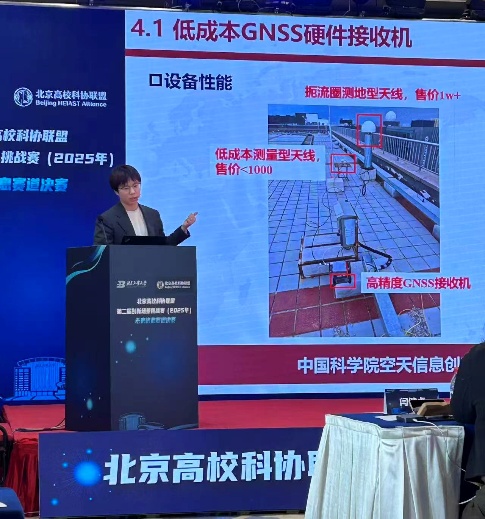
Following the preliminary evaluation, the project advanced to the final round. The final competition was held on December 3, 2025, at Beijing University of Technology, where I delivered an on-site presentation and answered questions from the judging panel. The event brought together outstanding innovation teams from different universities and disciplines, creating an opportunity to compare solutions and learn from projects addressing a wide range of real-world problems.
During the defense, I presented the project’s technical innovations, system design, application scenarios, and development roadmap. I also listened carefully to the judges’ suggestions concerning product design, operational reliability, practical deployment, and technology transfer. Their feedback was valuable for identifying the difference between a successful research prototype and a mature engineering product.
决赛现场展示与专家建议
经过前期评审,项目顺利进入决赛。决赛于 2025 年 12 月 3 日在北京工业大学举行,我进行了现场项目展示和答辩。比赛汇集了来自不同高校和专业方向的优秀创新团队,让我有机会了解其他团队如何利用不同技术解决实际问题。
在现场答辩中,我介绍了项目的技术创新点、系统设计、应用场景和后续发展思路,同时认真听取了评委专家关于产品设计、运行可靠性、实际部署和成果转化等方面的建议。这些反馈帮助我更加清楚地认识到,一个能够工作的科研原型与一个成熟工程产品之间仍然存在许多需要持续完善的环节。
First Prize in the Future Information Track
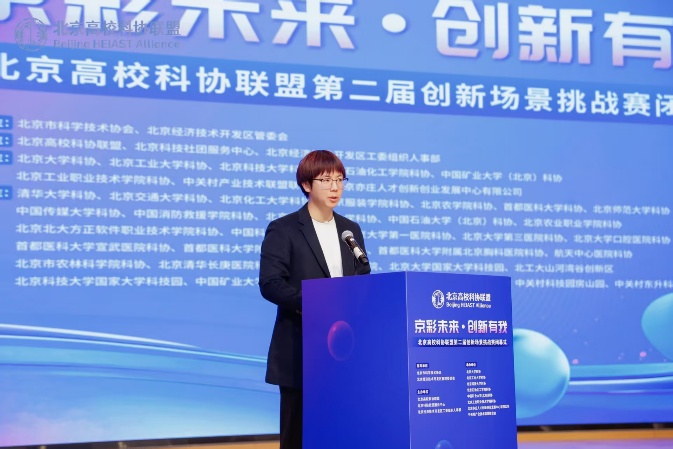
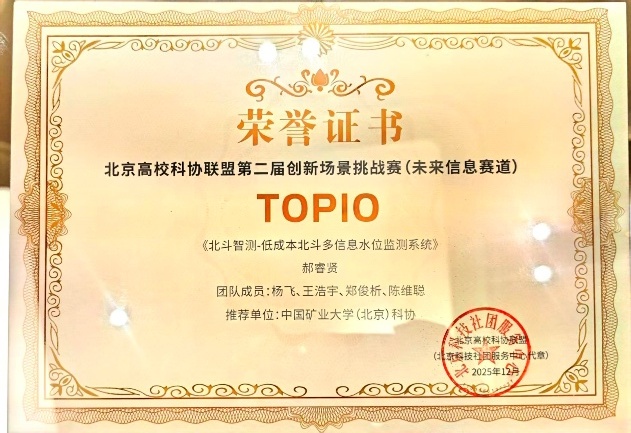
After the final, I was invited to the award ceremony in Beijing E-Town, also known as Yizhuang. The project received First Prize and ranked first in the Future Information Track. Hearing the result was both exciting and deeply rewarding. The award recognized the technical value of the project and also affirmed the sustained GNSS-IR research and development behind it.
获得未来信息赛道一等奖
决赛之后,我又受邀参加了在北京经济技术开发区(亦庄)举行的赛事颁奖典礼。最终,项目获得未来信息赛道一等奖,并取得第一名。当听到最终结果时,我感到非常激动,也十分自豪。这项荣誉不仅是对项目技术创新性的认可,也是对过去几年持续开展 GNSS-IR 研究和系统开发工作的肯定。
Moving from research papers to a prototype system and then to an innovation project has changed how I view the role of scientific work. Research outcomes can contribute not only through academic publication, but also through engineering products that address practical needs. I plan to continue improving the low-cost GNSS-IR monitoring system, strengthen its performance and operational reliability, and advance it toward real deployments in environmental and hydrological monitoring.
从科研论文到原型系统,再到创新创业项目,这段经历让我越来越深刻地体会到,科研成果不仅可以发表在学术期刊上,也能够以工程产品的形式服务于实际需求。未来,我希望继续完善低成本 GNSS-IR 水位监测系统,不断提升系统性能和工程可靠性,推动这项技术真正走向环境和水文监测的实际应用。